

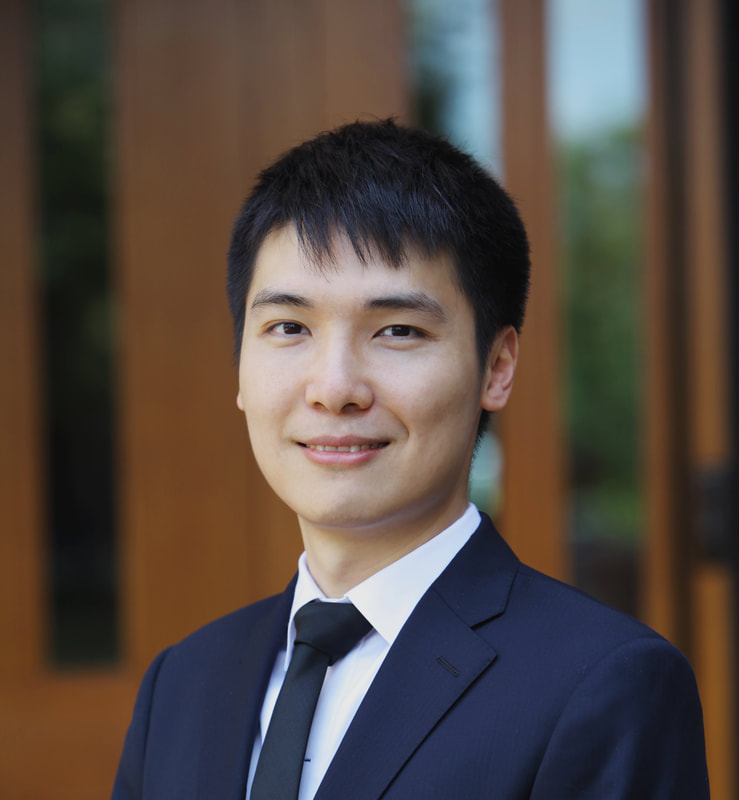
Alliance Program Spotlight: Professor Junnan He, Assistant Professor of Economics, Sciences Po
This semester, the Department of Economics is delighted to welcome Professor Junnan He from Sciences Po in Paris, France, as an Alliance Visiting Assistant Professor. In this conversation, he reflects on his academic journey, his time at Columbia through the Alliance Program, and his advice for students interested in quantitative and international research.
Could you start by briefly introducing yourself and your academic background?
I grew up in China and went to Australia for my undergraduate studies. I later pursued my PhD in the U.S., and I’m now an Assistant Professor of Economics at Sciences Po.
My interest in economics comes from how it allows us to study human interactions using quantitative methods. Within the field, I specialize in decision theory and econometrics, essentially, how to model decisions and behavior using formal tools and data.
What drew you to the Alliance Visiting Professorship at Columbia, and how has your experience been so far?
The Alliance Visiting Professorship is part of an exchange program that supports faculty and student mobility between French institutions such as Sciences Po and Columbia. It’s a wonderful opportunity to deepen cross-Atlantic academic collaboration. My time at Columbia so far has been very stimulating. A lot is happening in the Economics Department: seminars, reading groups, and informal discussions. I’ve attended numerous events and found the research environment very active and engaging during my time here.
How does the Alliance Program connect to your broader research goals? Have any conversations here been especially exciting?
The program has opened up many opportunities for collaboration. While nothing has turned into a co-authored paper just yet, I’ve had ongoing discussions with several faculty members both within and outside my field, and those conversations are already shaping potential new projects. My main hosts here are Professors Mike Woodford and Mark Dean. They run the Cognition and Decision Lab, where we meet weekly to discuss research. It’s been a great platform to exchange ideas, receive feedback, and think about how my work fits into the broader literature on cognition and decision-making.
What is your current research focus, and how has your time at Columbia influenced it?
My current research focuses on how decision-making is shaped by perception biases and complexity—not as random noise, but as structured patterns. We’re trying to understand how these patterns appear in data and how we can build models that better capture human decision-making and interaction. Being at Columbia has helped by exposing me to new perspectives and empirical applications. Conversations here often connect theoretical questions to concrete data and policy environments, which is very helpful for refining my research agenda.
How does your work differ from traditional economic models of decision-making?
Traditional economic models typically describe decision-making in terms of preferences and beliefs, and any deviations from “rational” behavior are often lumped into noise. My work treats biases differently. Instead of treating them as random errors, I study them as systematic, structured patterns in perception and decision-making. Recognizing this enables us to develop more effective theoretical frameworks and interpret empirical results more accurately. It helps us understand not just what choices people make, but why they make them when facing complexity and imperfect information.
You also use quantitative tools in your research. How do you see theory and data working together?
For me, theory and data are complementary. Theory helps us formalize mechanisms, and data then allows us to fact-check these mechanisms in the real world. Data then allows us to test whether these mechanisms are actually visible in the real world. By combining decision-theoretic models with econometric methods, we can both discipline our assumptions and ensure our models remain empirically relevant. This back-and-forth between theory and data is central to my work.
What advice would you give to students interested in methods-based or quantitative research?
I’m currently teaching an advanced undergraduate econometrics course that also includes some SIPA graduate students. My main advice is to master the basics first: statistics, econometrics, and related tools. A strong foundation makes it much easier to engage with more advanced methods later. Beyond coursework, get hands-on experience. Many journals now provide replication packages, which are an excellent way to interact with real research. Try to reproduce results, modify code, or extend simple parts of a paper. That kind of practical engagement is invaluable for building confidence with quantitative tools.
