

Interview with Jonathan Dingel, Columbia Economics Alumni & Professor
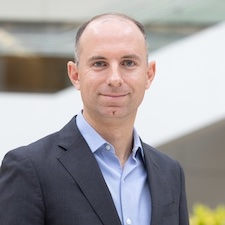
Alumni Spotlight: Jonathan Dingel, Professor, Department of Economics, Columbia University
Professor Jonathan Dingel is a Columbia Economics alumnus (PhD’14) who returned to the department as a faculty member. His research focuses on international trade, urban economics, and the spatial distribution of economic activity.
Could you briefly introduce yourself and share what led you to economics?
I got into economics through high school debate. I did policy debate, which involves a lot of research, and my debate partner and I followed current affairs closely. Around that time, President George W. Bush was seeking trade promotion authority for the Central American Free Trade Agreement, and I read work by Jagdish Bhagwati, including his books and articles on free trade agreements. That sparked my interest in trade policy, which ultimately led me to economics.
What brought you to Columbia Economics?
I actually did my PhD at Columbia, starting in the fall of 2008. I had a great experience as a graduate student and admired the faculty here, so when the opportunity arose to return as a faculty member, I was truly honored. Three of the professors from my dissertation committee are now my colleagues, which is very meaningful.
What differences have you noticed between being a PhD student and being faculty at Columbia?
A lot has changed. When I visited in fall 2023 as a visiting faculty member, I had a moment of déjà vu; I almost walked into my old graduate cubicle by accident. The 10th floor, where I used to work, has since been renovated. Some faculty are the same, but others are new, and the research conducted now is more advanced.
Were there any other formative moments that shaped your research interests?
Definitely. One summer during grad school, I read Jane Jacobs’s The Death and Life of Great American Cities. Living in New York at the time made it especially impactful. I went to Don Davis (Ragnar Nurkse Professor of Economics at Columbia University), who had expressed an interest in cities during one of our classes, and asked if he’d be interested in collaborating. That conversation led to a long-term research relationship and a series of papers about how cities work and their economic value.
Could you tell us about your recent paper on “Market Size and Trade in Medical Services”?
This research looks at how larger regions benefit from scale economies in medical services. They can attract patients from smaller areas, much like exporting. Our findings suggest that making it easier for patients to travel may be more effective than redistributing doctors. We compare the U.S. with smaller countries like Germany and France, where travel is easier, and there is less correlation between regional income and mortality.
What role do you think economists should play in shaping conversations around issues like climate change, trade, and inequality?
I see two roles. First, explaining well-established economic principles that are often misunderstood. For example, trade imbalances aren’t scorecards; just because imports exceed exports doesn’t mean a country is “losing”. Second, generating new insights, such as applying trade perspectives to health policy.
Finally, what advice would you give students or young professionals studying economics?
Economics is a powerful tool for understanding the world. Even simple models like supply and demand can offer deep insight. With today’s data and computing power, it’s an exciting time for quantitative work. I’d encourage students to engage with economics even if they don’t plan to major in it. These tools are valuable across many fields.
What does it mean to you to be part of the Columbia Economics alumni community?
I keep in touch with maybe a third to half of my PhD cohort. We mostly graduated around 2014. Overall, it’s been great to return in a different capacity and contribute to a place that shaped me.

